
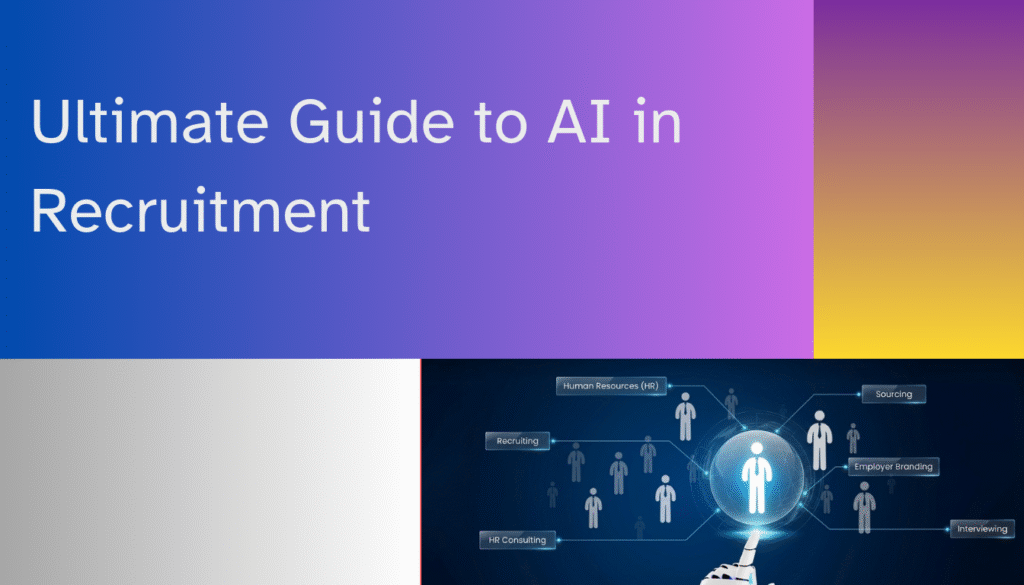
The Ultimate Guide to AI in Recruitment (Updated 2025)
Reading Time: 12 minutes
Have you ever wondered how top companies are filling positions faster, finding better talent, and reducing hiring costs all at the same time? The secret lies in artificial intelligence. AI in recruitment is no longer a futuristic concept. It’s reshaping how businesses discover, assess, and onboard talent in 2025.
But here’s the real question: Are you leveraging AI to its full potential, or are you still relying on traditional methods that drain time and resources?
The recruitment landscape has transformed dramatically. What once took weeks of manual resume screening, countless interview rounds, and gut-based decisions now happens in days with data-driven precision. Yet many HR professionals and business leaders are still uncertain about how to effectively integrate AI into their hiring processes.
Do you know which AI tools are worth the investment? How can you ensure AI enhances rather than replaces the human element in recruitment? What are the pitfalls you need to avoid?
This comprehensive guide will answer these questions and more. Whether you’re an HR manager looking to modernize your recruitment process, a startup founder building your first team, or a business leader aiming to gain a competitive edge in the talent market, you’ll discover actionable strategies to harness AI’s power in recruitment.
Let’s explore how AI is revolutionizing every stage of the hiring journey—from sourcing candidates to making the final offer.
Understanding AI in Recruitment: What Has Changed?
Artificial intelligence in recruitment refers to the use of machine learning algorithms, natural language processing, and predictive analytics to automate and enhance various hiring tasks. But what does this mean for your organisation?
The Evolution from Traditional to AI-Powered Recruitment
Think back to how recruitment worked just five years ago. Imagine a hiring manager drowning in hundreds of resumes for a single position, manually screening each one, scheduling interviews through endless email chains, and making hiring decisions based largely on intuition and limited data points.
Today’s reality is strikingly different. AI systems can scan thousands of resumes in seconds, identify the best-fit candidates based on comprehensive data analysis, schedule interviews automatically, and even predict a candidate’s likelihood of success in the role.
Key Areas Where AI Makes an Impact
AI isn’t just a single tool. It’s transforming multiple aspects of recruitment:
Resume Screening and Candidate Sourcing: AI algorithms analyse resumes at scale, identifying relevant skills, experience, and qualifications far more efficiently than manual review. What once took days now happens in minutes.
Candidate Assessment: Through AI-powered assessments and video interview analysis, recruiters gain deeper insights into candidates’ skills, personality traits, and cultural fit.
Chatbots and Communication: AI chatbots handle initial candidate queries, provide application status updates, and even conduct preliminary screening conversations, ensuring 24/7 engagement.
Predictive Analytics: Machine learning models analyze historical hiring data to predict which candidates are most likely to succeed, stay long-term, and contribute to organizational goals.
Diversity and Inclusion: When properly configured, AI can reduce unconscious bias by focusing on skills and qualifications rather than demographic factors.
The Major 3 Challenges in Traditional Recruitment
Before diving into AI solutions, let’s acknowledge the persistent problems that plague traditional recruitment processes.
#1 Time-Consuming Manual Processes
How many hours does your recruitment team spend on repetitive tasks? Manual resume screening, scheduling interviews, sending follow-up emails—these activities consume valuable time that could be spent on strategic relationship-building with top candidates.
Consider a typical scenario: Your company posts a job opening for a software developer. Within 48 hours, you receive 300 applications. Your recruitment team now faces the daunting task of reviewing each resume individually, a process that could take several days. Meanwhile, the best candidates are likely being courted by competitors who move faster.
#2 Inconsistent Candidate Experience
Candidates today expect a seamless, responsive hiring experience. Yet many organisations struggle to provide timely updates, answer questions promptly, or maintain consistent communication throughout the hiring process.
The result? Top talent loses interest and accepts offers elsewhere. In a competitive job market, providing an exceptional candidate experience isn’t optional. It’s essential for securing the best hires.
#3 Limited Data-Driven Decision Making
Traditional recruitment often relies heavily on gut instinct and subjective assessments. While human intuition has value, it’s prone to bias and inconsistency. Without data-driven insights, companies miss opportunities to identify patterns in successful hires and optimise their recruitment strategies accordingly.
How AI Addresses These Recruitment Challenges
Now that we understand the problems, let’s explore how AI provides solutions at each stage of the recruitment journey.
Stage #1: Intelligent Candidate Sourcing
Finding the right candidates is the foundation of successful recruitment. But where do you find them, and how do you reach them effectively?
AI-Powered Talent Discovery
AI tools go beyond traditional job boards, actively searching across multiple platforms (LinkedIn, GitHub, professional networks, and even passive candidate databases) to identify individuals whose skills and experience match your requirements.
What makes this different from traditional sourcing? AI doesn’t just match keywords; it understands context and relationships between skills, roles, and industries.
For example, an AI system searching for a “full-stack developer” can identify candidates who may not have that exact title but possess the relevant combination of front-end and back-end development skills, even if they’re currently working as “software engineers” or “web application developers.”
Proactive Candidate Engagement
AI tools can automatically reach out to potential candidates with personalised messages, nurturing relationships even before a position opens. This creates a pipeline of interested, qualified candidates ready for when you need them.
Benefits of AI in Sourcing:
Expanded Reach: AI searches across platforms simultaneously, accessing a broader talent pool than any human recruiter could manually manage.
Passive Candidate Identification: The best candidates often aren’t actively job hunting. AI identifies these passive candidates and assesses their potential fit.
Reduced Time-to-Source: What traditionally took weeks of research and outreach now happens in hours.
Stage #2: Automated Resume Screening and Ranking
Have you ever calculated how much time your team spends reading resumes? This is where AI delivers immediate, measurable impact.
How AI Resume Screening Works
AI-powered Applicant Tracking Systems (ATS) use natural language processing to analyze resumes, extracting relevant information about skills, experience, education, and achievements. But it goes further—these systems understand context, recognize synonyms, and can even identify transferable skills from different industries.
The system then ranks candidates based on how well they match the job requirements, presenting recruiters with a prioritized list of top candidates rather than an overwhelming pile of applications.
Addressing the Bias Concern
One concern about AI screening is potential bias. However, when properly configured, AI can actually reduce bias compared to human screening. How? By focusing on objective criteria—skills, qualifications, and experience—rather than factors like names, ages, or educational institutions that might unconsciously influence human reviewers.
The key is ensuring your AI system is trained on diverse, unbiased data and regularly audited for fairness.
Real-World Impact:
Imagine your company needs to fill an urgent position in your sales team. You receive 500 applications within the first week. An AI screening system analyses all applications in under an hour, identifying the top 50 candidates who meet your criteria. Your recruitment team can now focus their attention on these qualified candidates, conducting meaningful reviews and preparing for interviews—all while the AI continues monitoring new applications as they arrive.
Stage #3: AI-Enhanced Candidate Assessment
Assessing candidate skills and cultural fit is one of the most critical (and challenging) aspects of recruitment. How can you be confident you’re making the right choice?
Skills Assessment Through AI
AI-powered assessment platforms evaluate candidates’ technical skills, cognitive abilities, and even soft skills through various methods:
Coding Challenges: For technical roles, AI platforms provide real-world coding problems and automatically evaluate solutions for correctness, efficiency, and code quality.
Situational Judgment Tests: AI presents candidates with realistic workplace scenarios and analyzes their responses to assess decision-making abilities and alignment with company values.
Game-Based Assessments: Innovative AI tools use gamification to evaluate cognitive abilities, problem-solving skills, and personality traits in an engaging format.
Video Interview Analysis
One of the most controversial yet powerful AI applications is video interview analysis. These systems can analyze:
Verbal Content: What candidates say, how they structure their responses, and the relevance of their answers.
Tone and Sentiment: The emotional undertones in candidates’ speech patterns.
Language Complexity: Vocabulary usage and communication clarity.
Should you be concerned about this level of analysis? When used ethically and transparently, video interview AI serves as an additional data point, not a replacement for human judgment. The best practice is combining AI insights with human evaluation.
Predictive Success Modeling
Perhaps the most valuable AI capability is predicting candidate success. By analyzing patterns from your organization’s historical hiring data (which candidates succeeded in specific roles, stayed long-term, and contributed most effectively), AI can predict how well new candidates might perform.
Consider a scenario where you’re choosing between two candidates for a project management position. Both have similar qualifications on paper. However, AI analysis reveals that candidates with a specific combination of skills and experience patterns have historically excelled in this role at your company. This data-driven insight helps you make a more informed decision.
Stage #4: Streamlined Interview Scheduling and Communication
Coordinating interviews can feel like playing an endless game of calendar Tetris. Has your team ever lost a great candidate simply because scheduling took too long?
AI-Powered Scheduling
AI scheduling assistants eliminate the back-and-forth emails by:
Automatically Checking Availability: The system accesses calendars of interviewers and candidates, identifying mutually available time slots.
Sending Invitations: Once a time is selected, the AI sends meeting invitations, location details, and any necessary preparation materials.
Handling Rescheduling: If changes are needed, the AI manages the entire rescheduling process without human intervention.
Intelligent Chatbots for Candidate Communication
AI chatbots have evolved far beyond simple FAQ responders. Today’s recruitment chatbots can:
Answer Complex Questions: Provide detailed information about roles, company culture, benefits, and application processes.
Conduct Initial Screening: Ask qualifying questions and provide immediate feedback on application status.
Maintain Engagement: Send personalized updates and check-ins throughout the recruitment process.
Collect Feedback: Gather candidate feedback about their experience to continuously improve the process.
The result? Candidates feel valued and informed throughout their journey, while your recruitment team focuses on high-value activities rather than administrative tasks.
Stage #5: Data-Driven Decision Making
How confident are you in your hiring decisions? AI transforms recruitment from an art based on intuition into a science grounded in data.
Recruitment Analytics and Insights
AI platforms provide comprehensive analytics about your recruitment process:
Source Effectiveness: Which job boards, social media platforms, or referral programs produce the best candidates?
Time-to-Hire Metrics: How long does each stage of your process take, and where are the bottlenecks?
Quality-of-Hire Analysis: How do different sources and assessment methods correlate with employee performance and retention?
Diversity Metrics: Is your recruitment process attracting and advancing diverse candidates equitably?
Let’s say your analytics reveal that candidates sourced through employee referrals have a 40% higher retention rate after two years compared to those from job boards. This insight allows you to strategically invest more resources in building a robust employee referral program.
Continuous Improvement Through Machine Learning
The more you use AI recruitment tools, the smarter they become. Machine learning algorithms continuously analyze outcomes (which candidates succeeded, which didn’t, and why) to refine their predictions and recommendations.
This creates a virtuous cycle: Better data leads to better predictions, which leads to better hires, which generates more valuable data for future improvement.
Stage #6: Onboarding and Integration
Recruitment doesn’t end when the candidate accepts your offer. The onboarding experience significantly impacts new hire success and retention. How can AI support this critical transition?
Personalized Onboarding Experiences
AI can create customized onboarding plans based on the new hire’s role, experience level, and learning preferences. This ensures each employee receives relevant information and training without overwhelming them with unnecessary details.
Predictive Retention Analysis
AI systems can identify early warning signs that a new hire might be struggling or considering leaving. By analyzing patterns in communication, task completion, and engagement, AI alerts managers to potential issues before they become problems.
This proactive approach allows you to provide targeted support, increasing the likelihood of successful integration and long-term retention.
The 7 Best Practices for Implementing AI in Recruitment
Now that you understand what AI can do, how do you actually implement it successfully in your organization? Here are seven essential strategies:
#1 Start with Clear Objectives
Before investing in AI tools, define what you want to achieve. Are you looking to reduce time-to-hire, improve candidate quality, enhance diversity, or all of the above?
Clear objectives help you select the right tools and measure success effectively.
#2 Choose the Right AI Tools for Your Needs
The AI recruitment market offers countless solutions. How do you choose? Consider factors like:
Your Company Size: Enterprise solutions may be overkill for small businesses, while simple tools may not scale for large organizations.
Technical Requirements: Some AI tools require significant technical integration, while others work as standalone platforms.
Budget: AI tools range from affordable monthly subscriptions to substantial enterprise investments.
Specific Needs: Focus on tools that address your most pressing recruitment challenges.
#3 Ensure Data Quality and Privacy
AI is only as good as the data it’s trained on. Ensure your historical hiring data is accurate, complete, and representative. Additionally, prioritize candidate data privacy and comply with regulations like GDPR or local data protection laws.
#4 Maintain the Human Touch
AI should augment human recruiters, not replace them. The most successful recruitment strategies combine AI efficiency with human empathy, relationship-building, and nuanced judgment.
For instance, while AI might screen resumes and schedule interviews, human recruiters should conduct the actual interviews, build relationships with candidates, and make final hiring decisions considering factors AI might miss.
#5 Train Your Team
Your recruitment team needs to understand how to use AI tools effectively and interpret their outputs. Invest in comprehensive training to ensure your team feels confident and capable with the new technology.
#6 Monitor and Audit for Bias
Regularly audit your AI systems to ensure they’re not perpetuating or amplifying biases. Review the diversity of candidates being advanced through your process and adjust algorithms if necessary.
#7 Iterate and Optimize
Implementing AI in recruitment isn’t a one-time project. It’s an ongoing journey. Continuously gather feedback from your recruitment team and candidates, analyze results, and refine your approach.
Overcoming Common Concerns About AI in Recruitment
Despite its benefits, AI in recruitment raises valid concerns. Let’s address the most common ones:
“Will AI replace human recruiters?”
No. AI handles repetitive, time-consuming tasks, freeing human recruiters to focus on relationship-building, complex assessments, and strategic decisions that require empathy and nuanced judgment. Think of AI as a powerful assistant, not a replacement.
“What about bias in AI systems?”
Bias is a serious concern, but AI can actually reduce bias when implemented properly. The key is using diverse training data, regularly auditing outcomes, and maintaining human oversight. Traditional human-only recruitment is also prone to bias—AI provides an opportunity to be more objective if deployed thoughtfully.
“Isn’t this impersonal and off-putting to candidates?”
When used correctly, AI enhances rather than diminishes the candidate experience. Faster responses, consistent communication, and efficient processes make candidates feel valued. The key is balancing automation with personalized human interaction at critical touchpoints.
“What about the cost of implementation?”
While there’s an upfront investment, AI recruitment tools typically deliver strong ROI through reduced time-to-hire, lower cost-per-hire, and improved quality-of-hire. Many solutions offer scalable pricing that makes them accessible to organizations of various sizes.
The Future of AI in Recruitment: What’s Coming in 2025 and Beyond
AI in recruitment continues to evolve rapidly. What trends should you watch?
Hyper-Personalization
Future AI systems will create increasingly personalized experiences for both recruiters and candidates, adapting communication styles, assessment methods, and content based on individual preferences and contexts.
Improved Natural Language Understanding
AI will become even better at understanding the nuances of human communication, enabling more sophisticated analysis of resumes, cover letters, and interview responses.
Integration with Internal Mobility
AI will increasingly help organizations identify internal candidates for new positions, supporting career development and improving retention by matching employees with opportunities that align with their skills and aspirations.
Ethical AI Frameworks
As awareness of AI bias grows, expect more sophisticated frameworks and regulations around ethical AI use in recruitment, with increased transparency and accountability requirements.
Virtual Reality Assessments
Some organizations are already experimenting with VR-based assessments that place candidates in realistic work scenarios, providing unprecedented insights into how they’d perform in the actual role.
Conclusion: Embracing AI for Recruitment Excellence
The recruitment landscape has fundamentally changed, and organizations that embrace AI gain significant competitive advantages in attracting and securing top talent. But success requires more than simply purchasing AI tools. It demands thoughtful implementation, ongoing optimization, and a commitment to balancing technology with the human elements that make recruitment effective.
Are you ready to transform your recruitment process? Whether you’re taking your first steps with AI or looking to optimize existing implementations, the key is starting with clear objectives, choosing tools aligned with your needs, and maintaining focus on enhancing both recruiter efficiency and candidate experience.
The question isn’t whether AI will play a role in your recruitment future. It’s whether you’ll lead the transformation or struggle to keep pace with competitors who’ve already embraced these powerful tools.
Need guidance on implementing AI in your recruitment process? Want to explore which tools best fit your organization’s needs? Discover how Today App can help you streamline your recruitment with AI-powered solutions. Transform your hiring process and secure top talent faster with the right technology partner.
Ready to modernize your recruitment approach? Get started with Today App and experience the power of AI-driven recruitment. Start by auditing your current process, identifying your biggest pain points, and exploring AI tools specifically designed to address those challenges. The journey to AI-powered recruitment excellence begins with a single step. Make yours today.